
Individualism-Collectivism and Risk Perception around the World_Dr Wu Ziye_Research Webinar
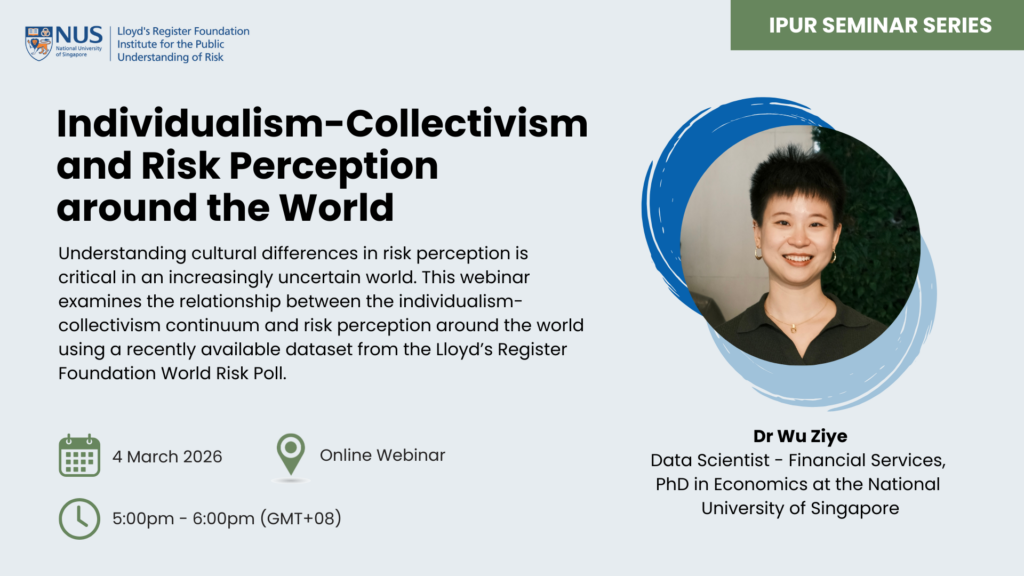
https://www.youtube.com/watch?v=m7P6-KgchnM Risk perception – how likely we feel harm could occur – is a cornerstone of everyday decision-making, from trying a new product or AI tool to navigating safety in our communities. It is also distinct from risk preference. While risk preference concerns one’s attitude toward taking risks, risk perception is about the felt likelihood […]
The value of understanding public risk perceptions and effective risk communication

In March 2011, a massive earthquake and subsequent tsunami struck the Tohoku region of Japan. The disaster resulted in significant loss of life and damage to infrastructure, including the Fukushima Daiichi Nuclear Power Plant. Japan’s well-developed early warning system was instrumental in notifying the public about the impending tsunami. The Japan Meteorological Agency (JMA) issued […]
What can we learn about our risk behaviour as we step into a new normal?

As Singapore enters a transition period and gradually lifts the safety measures to minimise the spread of COVID-19, we can look back at the numbers and consider the government’s response as effective. In a rapidly evolving situation with deep uncertainty, many would agree that the Singapore government demonstrated competence and leadership in coordinating the nation’s […]
Risk Pulse Monitor
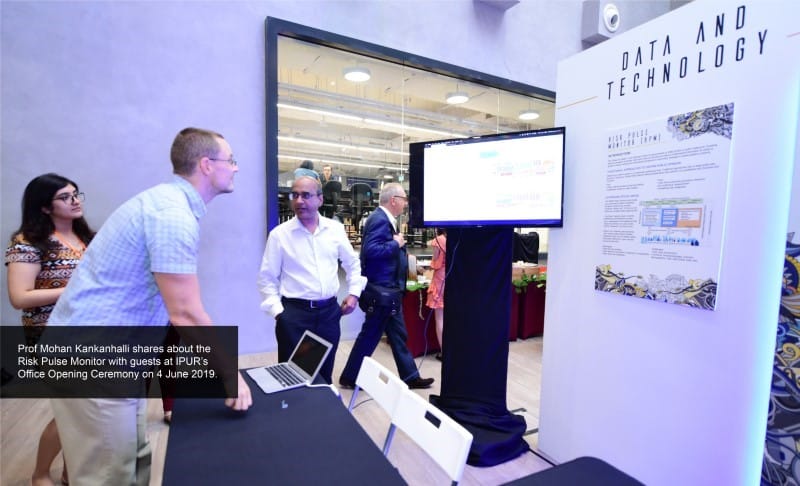
The “Pulse of a Nation” is an important metric for governments or other private or public institutions. Knowing what the members of society most worry about or perceive as risks is fundamental information for policy & decision making, ranging from educational programs to hard policy changes to tackle people’s concerns. The Risk Pulse Monitor (RPM) […]
Risk Communication in Public Health of Today

Risk communication is an essential part in public health. However, it has been considered the weakest area in many countries by the World Health Organization. Communicating risks in a responsible manner aiming to protect people’s health, and sharing information to ensure successful response, are main elements in any public health campaign. The mass media is […]
Improving disaster risk communication to save lives
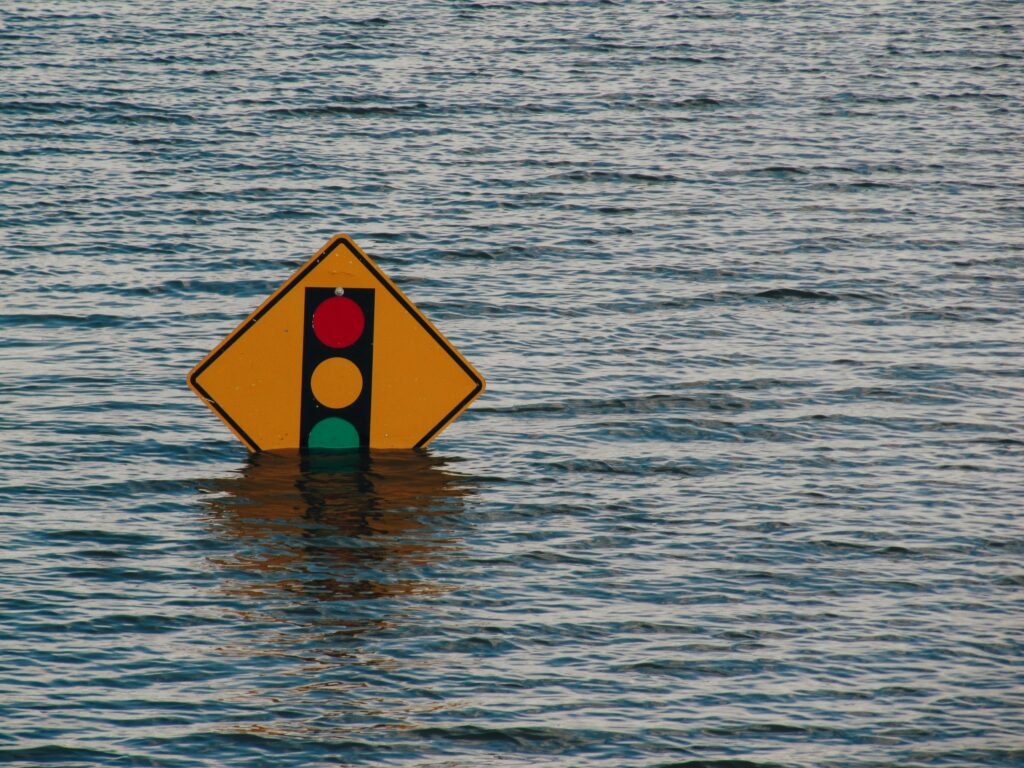
DOWNLOAD THE REPORT In the first week of September 2024, the ASEAN region was hit by 20 significant disasters caused by natural hazards, including floods, storms, and landslides. These events caused massive devastation, affecting 2.83 million people and claiming 46 lives. Unfortunately, this was not an outlier. Each week, thousands – sometimes millions – across […]
Digital inequality a risk to digital literacy

At the risk of sounding cliched, the COVID-19 pandemic has severely upended every domain in our lives. With stay-at-home restrictions imposed in about 70% of the countries, to varying extent, people have been turning to the cyberspace to carry out their work and human interactions. Remote working and learning have become the new norm, accelerated […]
Risk Perception Gaps – Risk Perceptions and Experience of Harm in Singapore, South Korea and China

In the second Project Wavelength report employing survey data from Singapore, South Korea, and China, we looked at the perceptions of risks among the the three countries and how they compared against each other. Infectious diseases were a leading source of worry for respondents in all three countries, but beyond this shared concern, there were considerable […]
Risk Perception Gaps – Government risk communications in Singapore, South Korea and China
This report is the first in a series employing survey data from Singapore, South Korea, and China. Each report highlights a different dimension of public perceptions surrounding everyday risks, including: Whether risk information provided by public authorities is accessible, understandable and relevant to members of the public; Whether individuals see governments, private companies, the media […]
Investigating the link between risk perceptions and culture

Do cultural norms and values influence the extent of our worries about risks and experiencing harms associated with those risks? Do social and economic factors come in to play and if so, which ones? The LRF Institute for the Public Understanding of Risk (IPUR) conducted the largest cross-cultural study across 86 countries to investigate the […]