IPUR and the Institute of Behavioral Science and Technology (IBT) is launching a new speaker series on AI and Society to address how AI is rapidly shaping how individuals make decisions, how organisations operate, and how societies evolve. From bias and misinformation to questions of accountability, governance, and human agency, this series brings together leading scholars, practitioners, and policy thinkers to examine how AI is reshaping risk, trust, and decision making across society.
Each session is a 45-minute fireside chat followed by 15 minutes of audience questions, held online via Zoom.
Through interdisciplinary talks and discussions, join IPUR and IBT in exploring how emerging AI technologies are reshaping public risk perceptions around work, governance, creativity, and human relationships, while examining the ethical, legal, and policy challenges that arise.
This series focuses not only on what AI can do but also on how people perceive, interpret, and respond to the risks it creates.
The first session is on 10 September 16:00 SGT (10:00 CEST) with Mark Polyak, Chief Operating Officer of MINT AI, moderated by Francis Ghesquiere. Mark will discuss how AI is reshaping public opinion research, from polling to predictive analytics, and what that means for accuracy and trust.
Other upcoming speakers are:
- Carl Benedikt Frey, Dieter Schwarz Associate Professor of AI & Work, Oxford Internet Institute, University of Oxford
- Julia Voo, AI Security Policy, Microsoft
- Julian De Freitas, Associate Professor of Business Administration, Harvard Business School
For more information about the speaker series, join the official mailing list here.
About IPUR
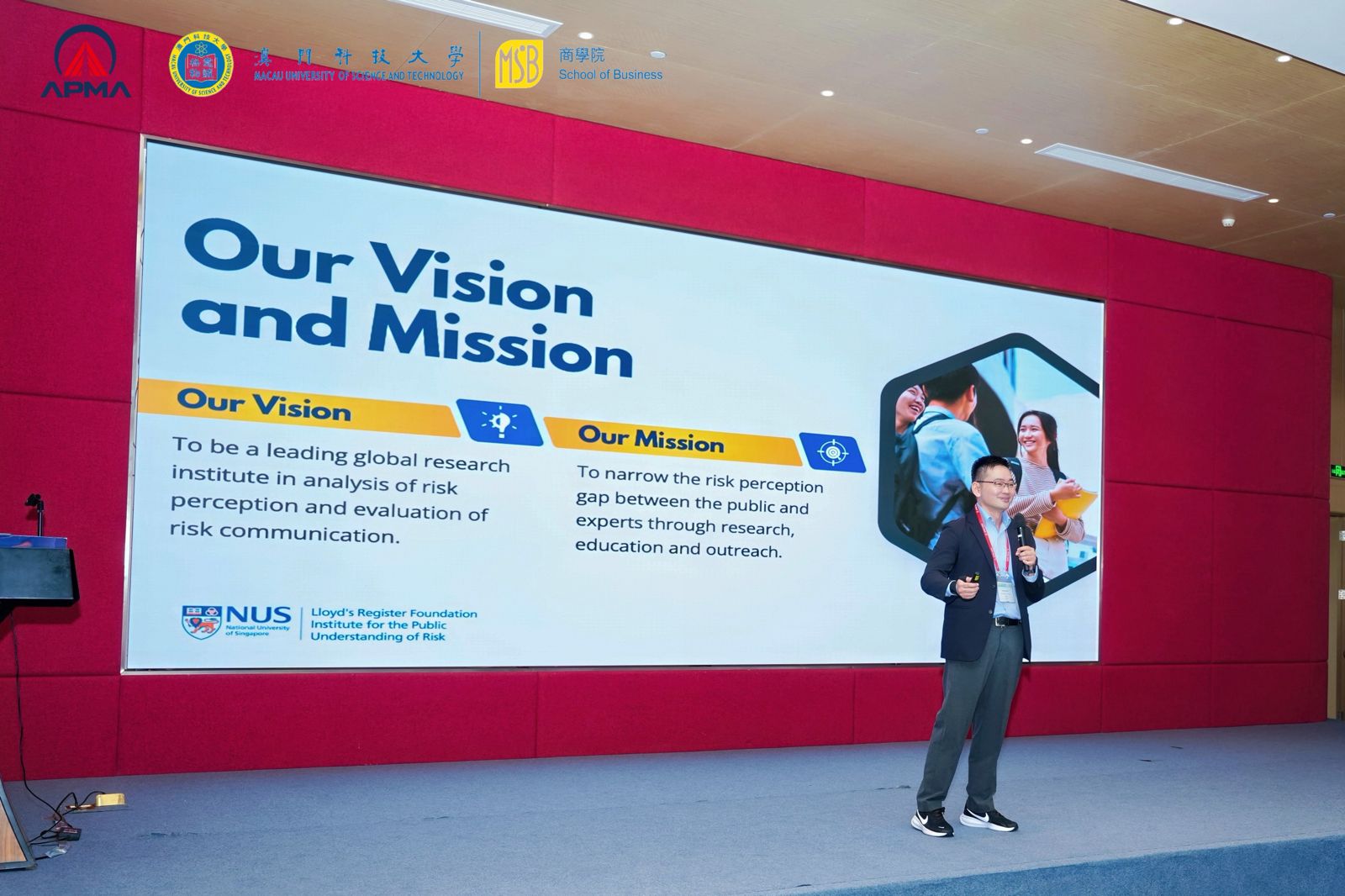
The LRF Institute for the Public Understanding of Risk (IPUR) is the premier institute focusing on public risk perception and communication in Asia, a region which faces acute and growing risks relating to public health, the environment, climate change and emerging technologies.
We investigate what people are worried about, where the gaps are between the public’s understanding of these issues and the experts’ risk assessment, and what interventions can help to bridge these gaps.
Launched in 2017, IPUR was established through funding from the Lloyd’s Register Foundation and the National University of Singapore. IPUR strives to shed light on some of the most pressing societal matters which are subject to uncertainty.
By dedicating ourselves to transform the risk communication landscape and enhance the public understanding of risk, we seek to improve lives with maximum impact.
About IBST
The Institute of Behavioral Science and Technology is an interdisciplinary research institute at the University of St.Gallen where behavioral science meets emerging
technology. We conduct high-impact, evidence-based research to understand, predict, and improve the human-technology relationship.
We integrate psychological, computational, and geographical sciences to build a holistic understanding of human behavior in the context of established and emerging technologies. By bridging these fields, we create more robust insights than any single discipline could provide.
We rely on robust scientific methods, combining experiments, behavioral data, sensing technologies, and computational approaches to study human-technology interactions in realistic settings.