Research SeminarsDisaster Risk ReductionEnvironment and SustainabilityInfrastructure Resilience
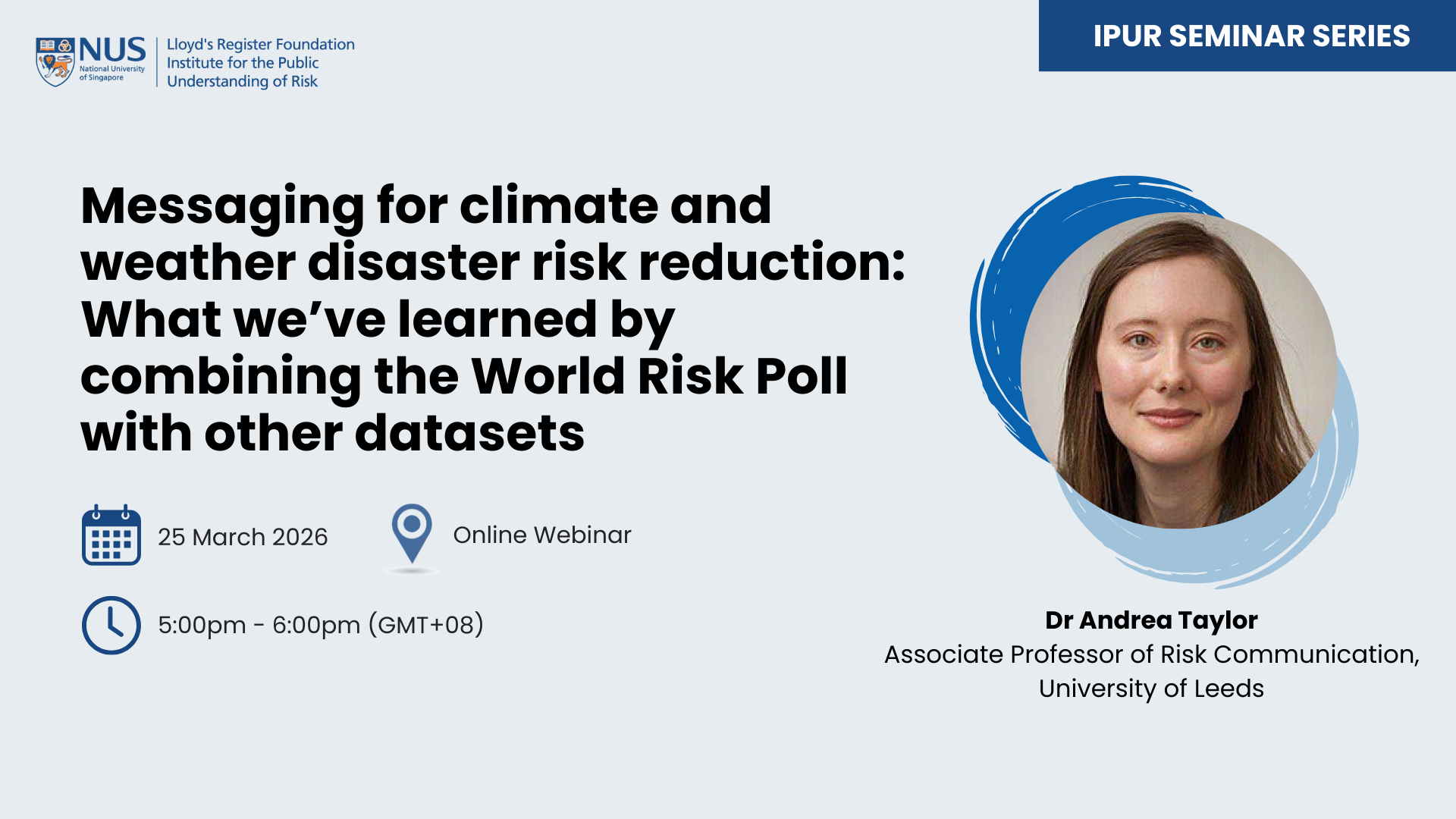
Messaging for climate and weather disaster risk reduction_Dr Andrea Taylor_Research Webinar
26 March 2026
Dr Andrea Taylor focused on understanding public perceptions of risk related to climate and weather disasters using data from the World Risk Poll. The Poll, which covers over 140 countries and includes more than 100,000 respondents per round, provides a unique global perspective on how people perceive and prepare for risks such as flooding, storms, and extreme weather.
The research integrates additional country-level data on disaster exposure, vulnerability, wealth, and governance, allowing for a nuanced analysis of both universal and country-specific predictors of risk perception and preparedness. Key findings highlighted that factors such as education, income, employment, and household size consistently influence risk perception and preparedness across countries. However, the relationship between disaster experience and preparedness was not straightforward—while those with direct experience often perceived higher risk, this did not always translate into greater preparedness.
The analysis also revealed significant differences between countries and clusters, with less affluent and more vulnerable populations feeling less prepared and receiving fewer warnings. Communication channels played a crucial role, with traditional media and SMS being particularly important in lower-income countries, while online sources were more prominent among younger people. The webinar, part of IPUR’s seminar series, underscored the importance of bridging the gap between warning provision and public action. Barriers to acting on warnings include structural issues (such as lack of resources or mobility), doubts about warning accuracy, and warning fatigue. The discussion emphasised the need for tailored communication strategies that consider local contexts and generational differences, as well as ongoing efforts to calibrate perceived preparedness with actual readiness.
The session concluded with recommendations for improving risk communication, building long-term capacity in vulnerable regions, and engaging stakeholders in future research and dissemination efforts.