NEWS
Intent vs Impact: The VOICE Exhibition spotlights how body comments can harm and what should change
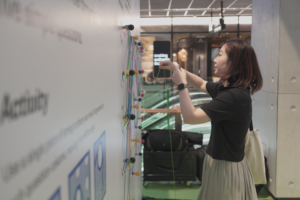
In central Singapore, shoppers paused mid-stride, not for a sale, but for stories. Set in Funan Mall, the the Visualising Obesity’s Impact from Childhood Experiences (VOICE) exhibition and its accompanying panel turned an everyday thoroughfare into a forum on a quieter crisis: the lasting harm of body shaming and weight stigma.
Bringing together clinical, research and community perspectives, the speakers traced how offhand comments – often framed as “concern” or “motivation”-can lodge early, shaping relationships with food, self-worth and health well into adulthood. Their message was direct: good intentions do not prevent harm, and changing the culture of “body talk” requires accountability, better systems, and new language at home.
The panellists were:
- Dr Keri McKrickerd (Principal Investigator in the Singapore Institute for Clinical Sciences and Assistant Professor at BISI)
- Gayatri Singh (Registered Member of Singapore Association for Counselling)
- Rani Dhaschainey (Founder of the Curve Cult, Personal Stylist, Fat Liberation Advocvate)
- Julian Wong, Co-founder and Head of Community and Partnerships, RICE Media (Moderator)
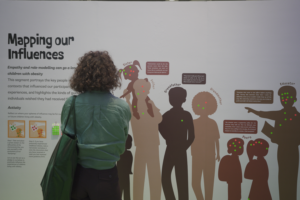
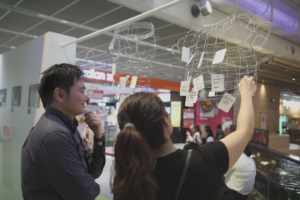
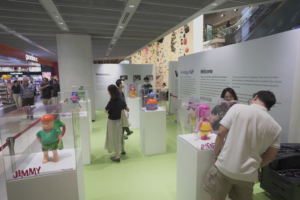
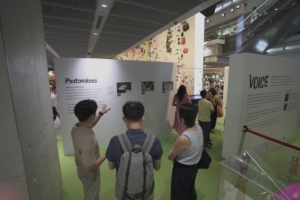
The VOICE exhibition was a research-led exhibition by IPUR and the Centre for Behavioural and Implementation Science Interventions (BISI) that used art and storytelling to surface the often unseen, long-term physical and mental health impacts of growing up with obesity. The exhibition was held from 26 Jan – 1 Feb and attracted about 3,000 visitors across the week.
Walking through the exhibition, panellists described being struck by what Rani called the “battle scars” carried by participants: marks of lifelong struggles with body image that can harden into resilience, but also into enduring shame. Another panellist noted how common it is to meet adults who are no longer plus-sized yet still live with a persistent internal message: “I’m not good enough.” The panel returned repeatedly to the idea that body-related harm is rarely a single incident; it accumulates, often beginning in childhood, becoming part of identity.
A central thread was the uncomfortable truth that harm frequently comes from “well-meaning adults” such as parents, relatives, teachers who believe they are motivating health or discipline. The discussion reframed this as a gap between intent and impact. Good intentions, panellists argued, do not cancel harmful outcomes. “Well-meaning is not enough.” Accountability begins when adults can acknowledge, without defensiveness, that their words hurt, then examine the beliefs underneath those words, from diet culture to narrow notions of health.
The panel also tackled the real-world challenge of speaking to older family members who shut down conversations with “I didn’t mean it that way.” The suggested approach was twofold: start by recognising their intent, then “psycho-educate” on impact, especially how deeply children absorb messages during developmental years. When education fails, boundaries become essential: removing a child from the situation, or offering immediate “corrective” conversations that affirm the child’s worth and name the remark as unacceptable.
From a behavioural science perspective, early experiences around food and body judgement were linked to later mental health trajectories including anxiety, depression, disordered eating, and internalised stigma. Dr McKrickerd emphasised a point that is “obvious but under-recognised”: these harms can persist independent of body size. Even when weight changes, the self-surveillance and shame can remain.
The panel made its call to action simple. Stop commenting on bodies. Offer compliments that do not rank appearance. Teach children through role modelling because, as Gayatri warned, kids are “watching more than they are listening.” And when conversations get uncomfortable, get curious: ask what sits underneath the resistance.
The exhibition was reported in the following news outlets: