Insights and Commentaries
Climate migrants are earning more. Why are their kids dropping out?
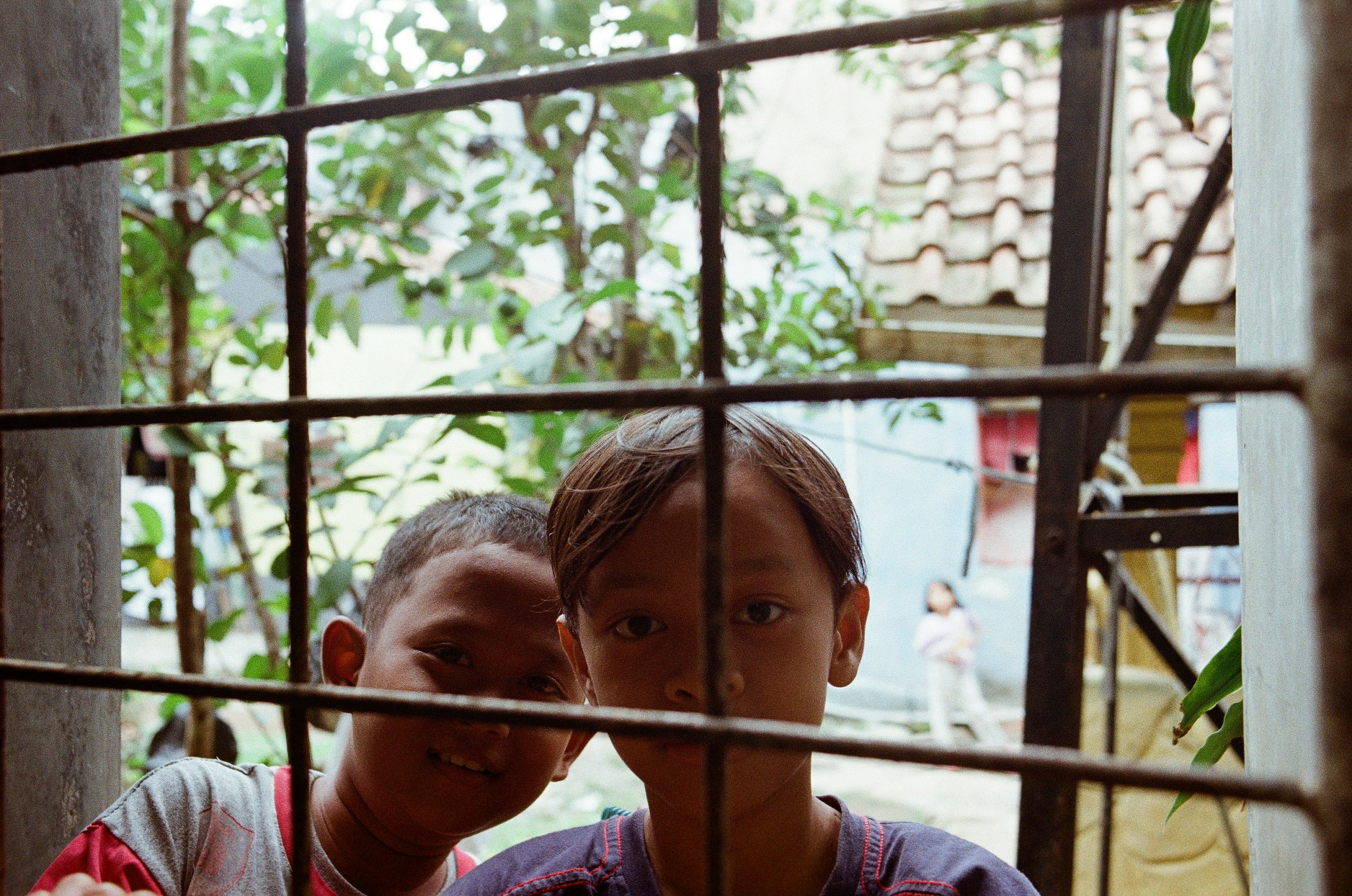
Hằng works at an Adidas supplier factory and her husband at a wood processing factory. The couple left their two daughters with the grandparents in Đồng Tháp province, when the girls were only infants.
For years, Hằng has dreamed of reuniting with her children. She decorated the room, inquired about schools and had the funds ready, but could not figure out childcare. The couple work until 7-8pm, and public schools close at 4:30pm.
In the past decade, more than one million have left the Mekong Delta for industrial zones in Ho Chi Minh City – as the region faces mounting environmental stress.
Once considered Viet Nam’s rice bowl, the delta now grapples with sediment loss, saltwater intrusion and soil erosion – the results of upstream dams, rampant sand mining and climate change.
While migration has improved many laborers’ incomes, families now face a dilemma with their children – to bring them or leave them behind.
In the delta, where getting to school means crossing mazes of rivers and canals, the exodus is widening the region’s already large education gap.
Whether left behind or migrating with their parents, children in the delta face various barriers to continue their studies. In 2024, the region topped the country for the number of children out of school and adults who did not finish a secondary education.
Migrant workers are now determined to secure a good education for their children, and they have the money for it, said a 2024 study by the National University of Singapore. Yet many have stumbled at the last barriers – childcare, bureaucracy and separation from their children.
Left Behind
Hằng is extremely worried her children will eventually drop out of school without her presence. She said her parents were illiterate and unable to help with homework.
“I only studied until seventh grade. But if she’s with me, [her study] will be more effective,” she told Mekong Eye.
Hằng’s concerns became a reality for Nguyễn Hồ Quốc Toản, whose son dropped out at 17.
“He couldn’t focus anymore. Maybe he missed us,” the shrimp farmer turned wood factory worker explained.
Toản’s children only finished 8th and 11th grade – further than most children in their village – thanks to his and his wife’s earnings in Bình Dương, Ho Chi Minh City. Yet without his parents close, the older child’s education was eventually cut short.
Now he works at a packaging factory while studying for a driver’s license, hoping to one day become a professional driver.
Their daughter is now their remaining hope. Like Hằng, Toản wishes to reunite the whole family in the city, where he believes their children will have better opportunities.
On the Move
Thang Huy (a pseudonym), 16, had been receiving a free education at a school 200 kilometers from her mother, until she dropped out in the 7th grade. Huy was the first of her family to reach secondary school, largely thanks to a provincial policy that prioritized ethnic Khmer students.
“I missed my parents,” the teenager explained. “I couldn’t focus on studying.”
Her 13-year-old brother soon followed in her footsteps. They are now reunited with their mother Xi (also a pseudonym) in Ho Chi Minh City, but the 32-year-old mother has struggled to re-enroll her children. Their landlord does not want to get involved in the paperwork, she said.
One major piece of paper often hinders migrant parents from enrolling their children in affordable public schools – a giấy tạm trú, or temporary residence certificate.
Landlords are required by law to register and confirm tenants’ temporary residence with local authorities. Not all comply, however, especially if their own business is illegitimate. Many are simply hesitant to deal with bureaucratic hassles.
“Sometimes they [the landlord and migrant] have to pay local officials just to get it done quickly and smoothly,” said the director of a local NGO in Ho Chi Minh City which supports migrant workers, who wished to speak anonymously.
Scholars say school transfers involve a process ridden with red tape, especially for migrant families.
“It’s even harder for families that are pushed out of the Mekong Delta by climate change,” said Trịnh Thị Trà, a research fellow at the Institute for the Public Understanding of Risk (IPUR) at the National University of Singapore.
These families tend to be poorer, less educated, far less informed or equipped to deal with such challenges than other migrant groups, she said.
Trương Chí Hùng, a lecturer at An Giang University and a researcher on Mekong Delta culture, who grew up in the region, said without addressing bureaucratic barriers, education policies will continue to exclude many migrants’ children.
Migrant parents need counsel, he argued, since they are often unfamiliar with the education system.
“Some strive to support their children through high school, but it often ends there,” Hùng said. “The children would marry soon afterwards because there is no one guiding them on what to do next.”
Leaving years of extreme heat and river sediment loss that withered their rice crops, Xi is determined to work long hours, even for a meager wage, to support her daughter. Yet such family support is not typical among migrant parents, Xi said, as many prefer to see their children start laboring jobs early.
“A lot of kids here are staying home like mine, waiting until they are grown enough to work,” she said.
Enrolled
Migrant families able to enroll their children often face another issue – childcare.
In factory-heavy districts, local governments have expanded public kindergarten programs, but they close by 5:30pm and offer no weekend or summer care. Across Ho Chi Minh City, only one public pre-school stays open an extra hour on weekdays and provides care on Saturdays.
To solve this problem, one migrant parent has to forgo overtime in the factory to fit school hours, or leave their job for informal gigs that are more flexible. Often, it is the mother.
Although the government has encouraged companies to provide on-site childcare, few have followed through.
Nguyễn Đức Lộc, director of the Social Life Research Institute and a sociologist who studies migrant labor, acknowledged the government’s efforts to ensure equal access to education.
“However, equity doesn’t just mean free or affordable,” he argued. “It has to mean quality and accessibility.”
There are private pre-schools that align with factory schedules and offer dependable care, but they charge more than half a worker’s monthly wages.
In industrial zones, informal, low-cost daycare centers have started to emerge to fill in the gaps. This is usually the only affordable option for migrant parents who are unable to send their children back to the countryside.
Yet after reports of overcrowding, neglect and physical abuse at some of these facilities, many parents had to take a more costly route – a private school.
Nguyễn Thị Đẹp, 30, a factory worker originally from Gò Quao commune in An Giang province, pays more than VND 4 million a month (US$153), nearly half her salary, to send her children to a licensed private preschool. This is the lowest tuition she could find in the industrial zone in Bình Dương.
Đẹp and her husband took extra shifts and cut back on spending to afford childcare, yet within six months, rising costs became unmanageable. Fearing debt, they sent their children back to their village.
The couple had worked as wage laborers on shrimp farms in the Mekong Delta, before they lost their jobs due to rising heat that decimated the shrimps, and moved to industrial Bình Dương with their children.
The move delayed their eldest daughter’s enrollment in first grade by one year. Then Covid-19 delayed her schooling for another year.
“It’s a regret I still carry,” Đẹp said, referring to her decision to bring the children to the city.
Earlier this year, the government proposed a monthly subsidy of VND 350,000 (US$13.40) for pre-school tuition and meals. Though this subsidy applies for migrant children attending private schools, many families told Mekong Eye the amount falls far short of covering actual costs.
Trà, the NUS research fellow, said climate migrants, already an extremely vulnerable group, frequently end up in informal settlements in the city, working precarious jobs.
If their children cannot access education, they remain trapped in this cycle of insecurity, she warned. “It’s a vicious cycle,” Trà said.
Separated Since Birth
As her six months of maternity leave is ending, Lê Thị Bích Phương, a 35-year-old Khmer mother, is preparing to leave her two-month-old baby daughter.
Phương has started weaning her baby and switched to formula, so the grandparents can take over when she returns to her factory job in Bình Dương.
“By the time I left, she would be used to formula,” Phương said.
Years ago, Hằng had to do the same for her two daughters. Being forced to wean them early took a heavy toll on the mother. She was constantly anxious about their health.
“I’m terrified of late-night calls,” said Hằng, her eyes fixated on their photos on her phone. “It could mean they need to go to the hospital.”
Hằng is going back and forth between her options, but is determined to keep her children in school as long as possible. She cannot afford to give up more overtime hours, while after-school tutoring in the countryside is not available.
“Whatever it takes, the lives of my daughters must be different from mine,” she said.
This story first appeared on Mekong Eye on 18 August 2025 and was written by Võ Kiều Bảo Uyên. It was produced in collaboration with Mekong Eye and climateXchange.
The names of localities, cities and provinces in this article reflect Viet Nam’s administrative reform, which took effect on July 1, 2025.