NEWS
Climate risk reporting must be applied at the local level, be actionable and build trust
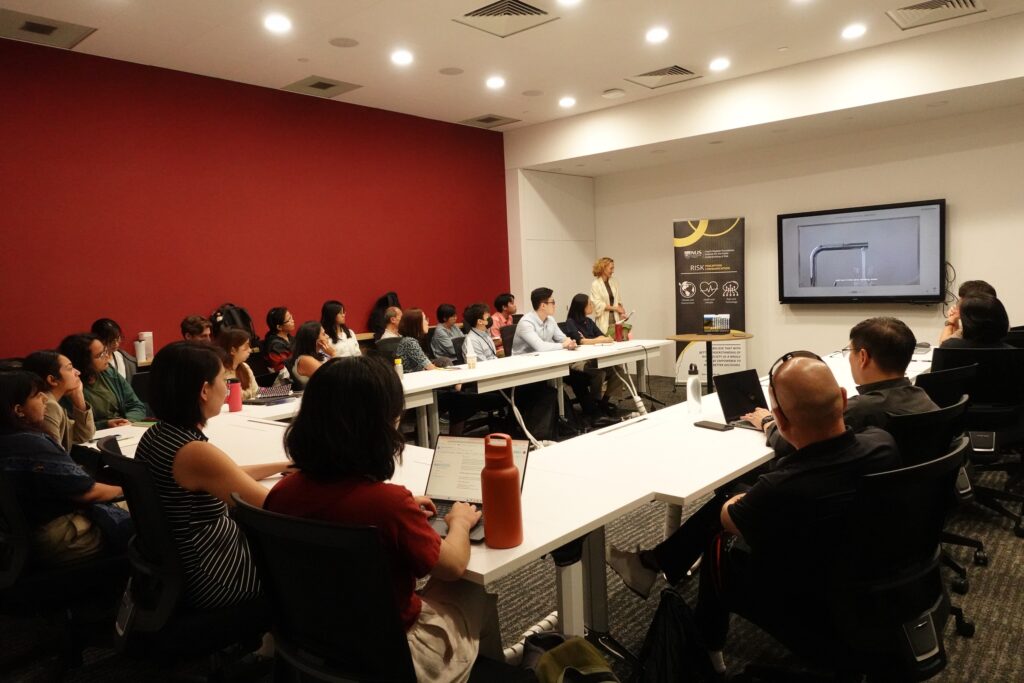

To cut through fatigue, fear and misinformation, climate reporting and communication must feel close to home, connect science and fact to lived experiences, and leave audiences with a clear action they can adopt.
This was the key message speakers and participants converged on at a workshop organised by IPUR, Internews and the Earth Journalism Network (EJN). About 50 people attended the workshop held on 17 September and organised in support of NUS Sustainability CONNECT.
The discussion opened with a flashpoint familiar to many: a video of a starving polar bear. While climate change is likely a factor, Dr Olivia Jensen, IPUR Lead Scientist (Environment and Climate) cautioned against simplistic narratives that pin a single image to a single cause. Other environmental dynamics can contribute to the animal’s circumstance, she noted, while acknowledging that the video has its effectiveness in evoking certain emotions in people.
In the same vein, she reflected on a 2021 PUB video from Singapore warning about climate change: visually striking, but short on guidance. What is it exactly that viewers are supposed to take away and do?
Make climate change feel close and show the link
Amy Sim and Paritta Wangkiat underscored the power of psychological proximity. People respond to risks they can see in their neighbourhoods, workplaces, and family routines. That’s where rapid attribution science has become a crucial bridge: when heatwaves, floods, or storms hit, attribution studies increasingly quantify how much climate change has intensified these events. Journalists can and should lean on that evidence to move beyond generic warnings, showing how global warming is already impacting in local areas.
To this end, Amy shared some of Internews and EJN’s work in the Asia–Pacific, particularly in low- and middle-income countries: funding, mentorship, and training to bolster climate reporting and environmental coverage. In regions where resources are thin and risks are high, local journalists are often the first to translate technical science into practical warnings and preparedness.
Be wary of guilt appeal messaging
The workshop examined “guilt appeals” in climate messaging. They can prompt self-reflection by highlighting value–action gaps, but they often leave audiences with lingering hopelessness. Dr Jensen pointed to publicity slogans like “you’re making the island disappear” that induce shame without a pathway to repair. She noted that if the goal is to evoke dissonance, there is also a need to offer achievable actions. Without this, there is a risk of numbing the same people that need to be mobilised to take action.
Focus on solution and impact-oriented reporting
Paritta reinforced the pivot from fear-led coverage to solution- and impact-oriented stories. Angling stories in such a way not only alleviates the sense of helplessness many can feel when scrolling through daily news, it can also open opportunities for journalists to report on how different groups experience climate change differently such as minority groups, pregnant women or those living in poverty.
During the discussion segment between speakers and participants, a couple of questions were raised:
- Where and how does AI fit into climate reporting?
- How do journalists measure the impact of their stories?
On AI, speakers said it should act as an amplifier of news stories, reaching communities and people that stories previously could not. Furthermore, as AI tools improve source-citation capabilities, they may help widen reach and drive traffic back to newsrooms. Speakers also cautioned against viewing AI as a substitute for traditional reporting, noting that AI lacks context and empathy, and raises unresolved legal and ethical questions about using journalistic content without attribution.
On impact, Paritta said not all stories will go viral and that it’s okay. She described community-focused pieces that draw modest clicks but catalyse local conservation. Impact can look like policy monitoring, partnerships with civil society, and sustained coverage of transboundary issues. Amy highlighted a specific case in Vietnam – where a journalist helped to expose sand mining discrepancies, land subsidence, and collapsing villages. The journalist’s efforts helped move officials to respond, illustrating how persistent reporting can influence public conversation and policy.